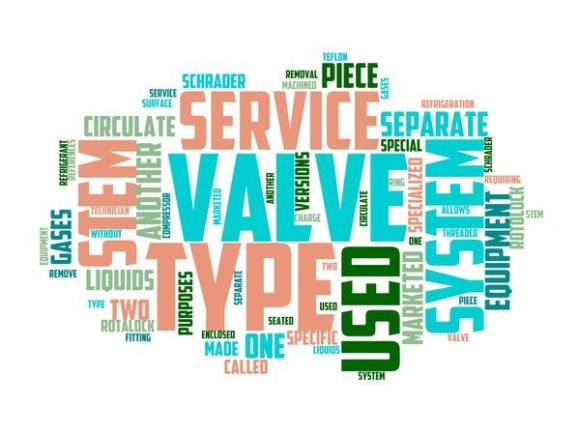
Valve Technician Typography Banner: Where Technical Precision Meets Creative Expression
In today’s rapidly converging creative and industrial landscape, the line between functional expertise and aesthetic storytelling is dissolving—not blurring, but dissolving. Nowhere is this more evident than in the rising adoption of the Valve Technician Typography Banner: a uniquely crafted, hand-drawn, colorful wordcloud design engineered not just for visual appeal, but for meaningful application across professional, entrepreneurial, and lifestyle contexts. More than a decorative motif, it represents a quiet shift in how technical identity is communicated—visually, authentically, and intentionally.
A Typography Banner Rooted in Real-World Expertise
The Valve Technician Typography Banner is not generic clipart or algorithmically generated text art. It’s a purpose-built typographic composition—hand-drawn with expressive line work, layered with vibrant, harmonized color palettes, and anchored by industry-relevant vocabulary: terms like “pressure,” “calibration,” “flow control,” “actuator,” “ASME,” “NDE,” and “ISO compliance” appear alongside human-centered words such as “precision,” “trust,” “resilience,” and “craft.” This duality—technical rigor paired with emotional resonance—is what distinguishes it from standard design assets.
Unlike static vector templates or overused stock banners, this banner was conceived to serve dual audiences: the professionals who live and breathe valve systems—field technicians, maintenance engineers, instrumentation specialists—and the creators, marketers, and small-business owners who need to communicate that expertise credibly and compellingly. Its structure supports both clarity and character: legible at scale on a safety poster, rich in detail when printed on a notebook cover, and adaptable enough for digital use in e-books or training modules.
Bridging Industry Evolution and Creative Demand
This design emerges at a pivotal moment. Globally, industrial sectors—from energy and water infrastructure to pharmaceutical manufacturing—are undergoing digital transformation. Yet paradoxically, there’s a growing consumer and B2B preference for human-scale authenticity. Clients don’t just want data dashboards—they want to see the hands behind the calibration tools. Learners don’t just need schematics—they respond to visuals that embed context, values, and narrative.
Enter the Valve Technician Typography Banner as a cultural artifact: it reflects an industry maturing beyond siloed technical documentation toward integrated communication strategies. Consider how trade schools now incorporate branding and visual literacy into technician curricula—or how OEMs co-brand with service partners using shared visual language. This banner doesn’t replace engineering drawings; instead, it complements them—appearing on orientation handouts, safety campaign posters, or even embroidered on high-vis jackets to reinforce team identity without compromising professionalism.
Why Professionals and Creators Are Adopting It Now
Three interlocking trends explain its accelerating relevance:
- Workflow Integration Over Isolated Assets: Designers and marketing teams no longer treat visuals as afterthoughts. They seek assets that work seamlessly across touchpoints—print, digital, textile, and physical product. The Valve Technician Typography Banner is built for this: scalable vector outlines, CMYK- and RGB-optimized color variants, and intentional spacing that preserves readability whether applied to a 4” x 6” business card or a 48” x 72” trade show backdrop.
- Values-Driven Branding in Technical Fields: Buyers increasingly evaluate vendors not only on specs and SLAs—but on perceived integrity, continuity, and craftsmanship. A well-placed banner on a service van decal or equipment tag signals attention to detail and pride in trade. It transforms functional identifiers into brand moments—without slogans or sales language.
- Rise of Hybrid Skill Sets: Freelance illustrators now collaborate directly with engineering firms. Small manufacturers launch DTC tooling accessories. Educators build online courses blending theory and hands-on practice. In each case, they need design elements that respect domain knowledge while inviting engagement. This banner delivers that balance—technical enough to earn credibility, warm enough to invite curiosity.
Practical Applications Across Industries and Mediums
Its versatility isn’t theoretical—it’s field-tested. Here’s how professionals are putting it to work:
- Training & Onboarding: Used in illustrated SOP booklets and interactive PDFs, the banner appears as chapter headers—reinforcing key concepts visually before diving into procedural steps. One municipal water authority reported a 22% increase in trainee retention of safety protocols when paired with contextual typography versus bullet-point-only formats.
- Product & Packaging Design: A manufacturer of smart valve actuators applied a monochrome variant to packaging inserts and QR-linked digital manuals—creating continuity between hardware, documentation, and support portals. Customers noted improved perception of “cohesive engineering thinking.”
- Craft & Lifestyle Commerce: Independent makers print the full-color version onto cotton tea towels, ceramic mugs, and canvas tote bags sold at engineering conferences and maker fairs. These aren’t novelty items—they’re conversation starters. A technician wearing a pillow featuring the banner at a plant walkthrough sparked a 45-minute discussion about predictive maintenance workflows.
- Digital & Print Collateral: Marketing teams embed it in proposal decks (as subtle background texture), event banners (scaled for visibility), and LinkedIn banner images—positioning subject-matter expertise as both grounded and forward-looking. Unlike stock photography, it avoids clichés (“gloved hands turning a wrench”) while still signaling domain fluency.
Design Integrity Meets Real-World Constraints
What makes this banner sustainable—not just trendy—is its adherence to functional design principles. The hand-drawn aesthetic avoids sterile uniformity, yet maintains consistent stroke weight, kerning logic, and color contrast ratios compliant with WCAG 2.1 AA standards. Each word is legible in isolation, and the overall composition balances density with breathing room—critical for applications like safety signage where rapid comprehension impacts outcomes.
Moreover, it’s designed for adaptability without dilution. You can extract individual words for use as icons or labels (e.g., “leak test” as a stamp on inspection reports) or apply duotone filters for apparel without losing semantic clarity. That flexibility reduces production friction—no need to commission custom illustrations for every new use case.
Looking Ahead: Not Just Decoration—Deliberate Communication
The future of technical communication won’t be defined by louder fonts or flashier animations. It will be shaped by intentionality: choosing visuals that reflect depth of knowledge, respect for process, and empathy for audience. The Valve Technician Typography Banner exemplifies that ethos—not as a standalone graphic, but as a strategic component in a broader ecosystem of trust-building tools.
For entrepreneurs launching niche engineering consultancies, it offers instant visual shorthand for specialization. For educators designing hybrid learning experiences, it bridges abstract theory and tangible practice. For freelancers building portfolios, it demonstrates fluency in both craft and context—proving they understand not just how to design, but why certain forms resonate within specific professional communities.
That’s the quiet power of this asset: it doesn’t shout. It aligns. It connects. And in doing so, it meets a deeper, unspoken need—to make expertise visible, relatable, and enduring.
Whether you’re sourcing assets for a new service launch, refreshing internal training materials, or designing merchandise that honors skilled labor, the Valve Technician Typography Banner invites you to communicate with precision, warmth, and quiet confidence—because the most impactful messages are those that speak the same language as the people who rely on them.