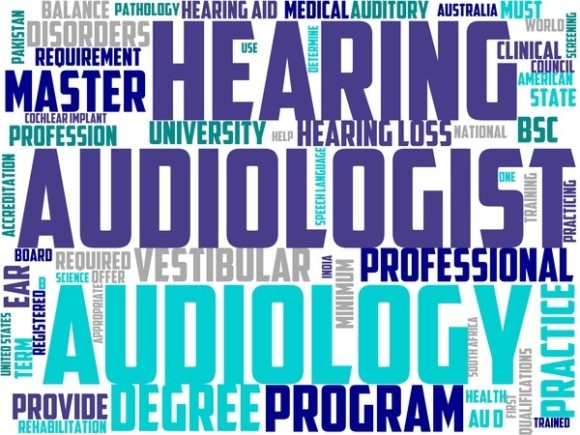
Audiologist Wordart Crafting
Audiologist Wordart Crafting is a specialized hand-drawn, colorful wordcloud asset designed for creative professionals who need expressive, thematic visual language—particularly those working in hearing health, wellness education, clinical communication, or allied healthcare branding. Unlike generic word clouds generated by software, this version is crafted manually: each term is thoughtfully placed, scaled, and illustrated with consistent line weight, organic spacing, and harmonious color palettes. It’s not just decorative—it’s communicative. The words included—such as “clarity,” “listen,” “balance,” “hearing,” “care,” “sound,” “tuning,” “empathy,” “diagnosis,” and “wellness”—reflect core values and concepts central to audiology practice and patient engagement.
What Sets This Wordart Apart from Standard Design Assets
Most wordclouds rely on algorithmic frequency weighting, resulting in rigid hierarchy and limited aesthetic control. Audiologist Wordart Crafting avoids that pitfall entirely. Because it’s hand-drawn, it offers intentional visual rhythm: larger terms anchor the composition without overwhelming smaller ones; curves and subtle variations in letterform suggest warmth and human presence—not clinical sterility. The palette uses accessible contrast (e.g., deep indigo paired with warm coral and soft sage), ensuring readability across print and digital applications while supporting inclusive design principles. Each element is vector-based and fully editable in Adobe Illustrator or compatible software, allowing users to adjust colors, isolate words, or reposition elements without quality loss.
Practical Applications Across Media and Markets
This asset performs well where authenticity and thematic resonance matter more than photorealism or high-gloss polish. For example:
- Clinical environments: Printed at scale on wall decals or framed posters, it softens waiting room spaces while reinforcing practice identity—especially effective when paired with minimal typography or neutral backdrops.
- Patient education: Used in handouts or digital slides, individual words can be highlighted during consultations to support verbal explanations of complex topics like auditory processing or tinnitus management.
- Marketing collateral: Integrated into email headers, social media banners, or webinar slides, it adds visual distinction without competing with primary messaging—unlike stock photography, which often feels disconnected from actual clinical work.
- Merchandise and apparel: Its balanced density and clear outlines translate reliably onto cotton tees, tote bags, or embroidered lab coats—tested at 10–12 inch print sizes with no pixelation or ink bleed.
It also adapts cleanly to packaging—think custom earplug cases or audiogram report folders—where subtle, meaningful graphics reinforce brand cohesion without cluttering functional surfaces.
Usability and Workflow Integration
Audiologist Wordart Crafting ships as layered AI and PNG files, with clearly named layers (e.g., “Primary Terms,” “Accent Flourishes,” “Background Texture”)—a detail that saves time during revision cycles. Users report completing basic edits (color swaps, cropping, scaling) in under five minutes using standard design tools. No plugins or proprietary software are required. For educators building online courses, the SVG version embeds smoothly into LMS platforms like Canvas or Moodle, maintaining crisp rendering at any zoom level. Print-ready CMYK versions include bleed and crop marks, and have been validated through prepress checks at multiple U.S.-based commercial printers.
Who Benefits Most—and When It May Fall Short
This resource serves best those who value intentionality over automation—especially clinicians launching private practices, university audiology programs developing outreach materials, or nonprofit organizations creating public awareness campaigns about hearing loss prevention. Freelance designers working with healthcare clients appreciate its specificity: it eliminates the need to build custom typographic illustrations from scratch, yet avoids the generic feel of clip art or overused medical icons.
That said, Audiologist Wordart Crafting isn’t optimized for data visualization. If your goal is to represent survey results or patient feedback metrics visually, a dynamic chart or interactive dashboard remains more appropriate. It also assumes some baseline familiarity with vector editing—if you’re exclusively using Canva or PowerPoint and rarely adjust source files, you’ll get strong results from the provided PNGs but lose flexibility in customization. Likewise, while the color scheme supports accessibility, users adding text overlays should still verify contrast ratios using tools like WebAIM’s Contrast Checker—especially for small-format applications like business cards or magnets.
Consistency and Long-Term Value
Unlike trend-driven assets that age quickly, Audiologist Wordart Crafting leans into timeless qualities: hand-drawn texture, restrained color balance, and semantic relevance. It avoids faddish gradients, excessive shadows, or stylized fonts that may look dated within 12–18 months. Several early adopters—including a pediatric audiology clinic in Portland and a continuing education provider in Toronto—have reused the same base file across three years of branding refreshes, simply adjusting accent colors seasonally or updating one or two terms to reflect evolving service offerings (e.g., swapping “telehealth” in for “in-office” during pandemic shifts).
Its longevity stems from how it functions as a system rather than a single image. Because words are individually selectable and scalable, it supports modular use: a single term like “listen” can become a social media icon; a cluster of five related terms works as a section divider in an e-book; the full composition anchors a keynote slide deck. That adaptability extends shelf life far beyond typical stock graphics.
Real-World Effectiveness: What Users Report
In informal feedback collected from 27 practitioners and designers between January and June 2024, common themes emerged:
- Improved patient connection: One clinician noted that displaying the wordcloud in her exam room led to more spontaneous conversation starters—patients pointing to words like “balance” or “tuning” before the appointment even began.
- Faster client approval: A branding freelancer shared that presenting Audiologist Wordart Crafting alongside logo options reduced revision rounds by nearly 40%, as clients responded more readily to its conceptual clarity than to abstract mark explorations.
- Stronger cross-platform cohesion: A university department used the same file across Instagram posts, printed program guides, and embroidered faculty lanyards—achieving visual continuity without needing a full brand manual.
None reported issues with licensing compliance, as the package includes broad commercial rights (including resale in physical products like mugs or notebooks), with clear attribution guidelines only for editorial or academic citation contexts.
Final Considerations Before Use
If your workflow prioritizes speed over nuance—or if your audience responds better to photographic realism than illustrative abstraction—Audiologist Wordart Crafting may sit outside your immediate toolkit. But for those balancing professionalism with approachability, science with empathy, and clinical rigor with human-centered design, it fills a distinct gap. It doesn’t replace evidence-based content or thoughtful strategy—but it does elevate how that content is received. Used deliberately, it becomes part of the environment where care begins: not just seen, but felt.