Archeology Wordart Tshirt: A Versatile Design Resource for Creative Projects
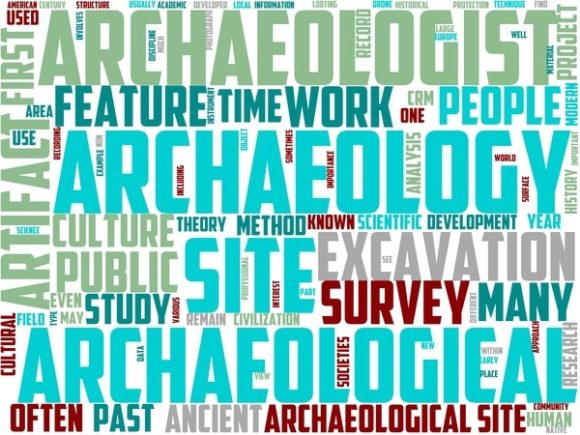
The Archeology Wordart Tshirt refers to a hand-drawn, colorful word cloud illustration centered on themes of archaeology—such as excavation, discovery, ancient civilizations, fossils, and historical inquiry. Though named for t-shirts, it is not limited to apparel. It functions primarily as a ready-to-use digital design asset intended for both personal and commercial applications across print and digital media.
This word cloud features layered, organic typography arranged in an aesthetically balanced composition. Words are rendered in varying sizes, orientations, and hues, evoking the tactile, exploratory nature of archaeological work. Its hand-drawn quality distinguishes it from algorithm-generated or vector-based word clouds, lending warmth and authenticity to projects where visual personality matters.
Why Consider the Archeology Wordart Tshirt?
Individuals often seek this design for projects requiring thematic cohesion and visual storytelling without custom illustration. Educators may use it in classroom materials to introduce archaeology concepts; designers might incorporate it into museum exhibit graphics or academic conference branding; crafters could apply it to handmade journals or fabric-printed tote bags. Its appeal lies in its specificity—it communicates a clear subject while retaining flexibility in application.
Interest typically arises when users need a design that is:
- Topically precise—immediately signaling archaeology rather than generic science or history;
- Visually engaging—with color and texture that stand out in both digital and printed formats;
- Adaptable—scalable and usable across multiple substrates (fabric, paper, ceramic, vinyl) without loss of character.
Benefits and Practical Advantages
One primary benefit is time efficiency. Creating a cohesive, hand-crafted word cloud from scratch demands illustration skill, typographic judgment, and subject-matter knowledge. The Archeology Wordart Tshirt offers a professionally composed alternative that reduces production time while maintaining artistic integrity.
It supports diverse output formats. When supplied as a high-resolution PNG with transparent background—or as a layered PSD or vector file—it can be resized for embroidery digitizing, screen-printed onto textiles, or embedded in editorial layouts. Its color palette is typically designed for broad compatibility, avoiding neon or overly saturated tones that may shift unpredictably during CMYK conversion.
Another advantage is thematic consistency. Unlike stock photos or generic icons, this word cloud embeds meaning directly into its form: terms like “stratigraphy,” “artifact,” “carbon dating,” and “Mesopotamia” appear alongside visual cues such as stylized trowels or pottery shards. This reinforces messaging without requiring additional explanatory elements.
Tradeoffs and Realistic Expectations
Users should recognize that the Archeology Wordart Tshirt is a fixed composition—not a customizable generator. While some versions include editable layers or font files, most deliver a finalized image. Adjusting individual words, repositioning elements, or altering color relationships requires intermediate graphic design skills and compatible software.
Also, licensing terms vary by source. Some providers grant broad commercial rights—including use on physical products for resale—while others restrict usage to personal or non-merchandise contexts. Reviewing license scope before purchase is essential, especially for makers planning to sell finished goods like apparel or home décor items.
Color fidelity is another consideration. On-screen previews may not reflect how pigments render on fabric dye or matte paper. Testing small batches or requesting physical proofs helps align expectations with final output.
When This Design Is a Strong Fit
The Archeology Wordart Tshirt works well in settings where thematic resonance and visual warmth outweigh the need for absolute uniqueness. For example:
- An educator designing a unit on ancient Egypt for middle school students may use it on handouts, bulletin boards, and presentation slides to reinforce vocabulary and engagement;
- A small museum shop developing limited-run merchandise—such as cotton canvas bags or ceramic mugs—can leverage the design’s recognizability to attract visitors interested in anthropology and fieldwork;
- A self-publishing author creating an illustrated guide to archaeological methods may integrate the word cloud into chapter headers or section dividers to unify the book’s aesthetic.
In each case, the design serves as a visual anchor—supporting content rather than competing with it.
When Alternatives May Be More Appropriate
Custom illustration remains preferable when brand identity demands strict control over style, tone, or terminology. A university department launching a new archaeology degree program may require bespoke visuals aligned with institutional colors and typography—something a pre-made word cloud cannot provide without significant modification.
Similarly, projects needing multilingual support—such as bilingual educational posters for Spanish- and English-speaking communities—may find the fixed English-only text limiting. In those instances, a scalable vector template or typographic layout built in design software offers greater flexibility.
For large-scale commercial production—like national retail apparel lines—licensing restrictions or stylistic repetition across product categories could pose challenges. Here, working with a designer to develop an original motif ensures differentiation and long-term scalability.
Making an Informed Decision
To determine whether the Archeology Wordart Tshirt suits your needs, begin by clarifying your core objective: Are you aiming to communicate archaeology-related ideas efficiently? Do you value hand-crafted aesthetics over full customization? Is your project scoped to small-batch or one-off creation rather than mass production?
Next, assess technical requirements. Confirm file format compatibility with your tools (e.g., Adobe Illustrator for vector editing, Cricut Design Space for cutting machines). Verify resolution meets your largest intended use—300 DPI at full size is standard for print; 72–150 DPI suffices for web banners or social media graphics.
Finally, compare licensing terms across vendors. Look for clarity on permitted uses, attribution requirements, and limitations on derivative works. If resale is part of your plan, ensure the license explicitly covers merchandising on physical goods.
Used thoughtfully, the Archeology Wordart Tshirt functions less as a standalone product and more as a foundational element—a starting point that accelerates execution without compromising thematic intent. Its strength lies not in universality, but in its focused relevance to a well-defined domain of interest and application.