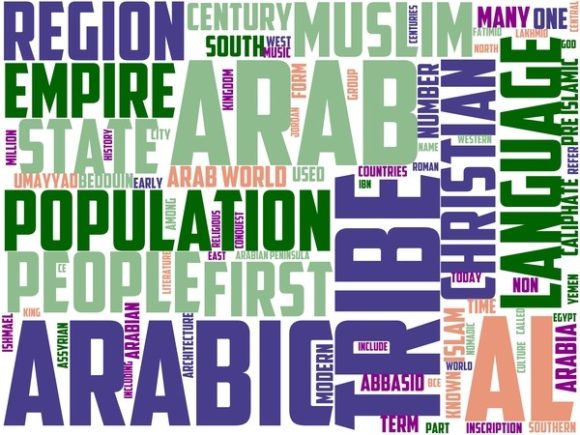
Arabic Wordart Book Cover
Arabic Wordart Book Cover refers to a distinctive, hand-drawn, colorful wordcloud designed with authentic Arabic typography—curved, fluid, and rich in visual rhythm. Unlike generic text graphics, it’s crafted with cultural nuance, typographic sensitivity, and artistic intention. It’s not just decorative; it functions as a flexible design asset that bridges language, aesthetics, and utility across physical and digital workflows.
This resource fits most naturally into the *asset preparation phase* of creative or marketing projects—whether you’re launching a bilingual book, designing a wellness journal, producing limited-edition apparel, or developing educational materials for Arabic-speaking audiences. Its value emerges early: when you need visual cohesion without sacrificing linguistic authenticity or emotional resonance.
How It Integrates Into Real Workflows
For publishers finalizing an Arabic-English dual-language memoir, the Arabic Wordart Book Cover serves as both a title treatment and thematic anchor—layered over textured backgrounds, aligned with gold foil mockups, or adapted into embossed cover finishes. Designers import it into Adobe InDesign or Affinity Publisher at high resolution, scale non-destructively, and adjust color overlays to match brand palettes—all while preserving the integrity of each Arabic glyph’s connection and flow.
Entrepreneurs launching a lifestyle brand often use it during product development—not just on the book itself, but across touchpoints. A single wordcloud file becomes the source for screen-printed tote bags, laser-cut wooden bookmarks, sublimation-printed pillow covers, and SVG-cut vinyl stickers. Because it’s delivered in vector (AI/EPS) and high-res PNG formats, it scales cleanly from 2-inch embroidery patches to 48-inch wall posters without pixelation or distortion.
Educators building classroom resources integrate it into printable flashcards or vocabulary posters. Rather than typing isolated words, they leverage the pre-composed composition—where terms like “تفكر” (think), “ابتكار” (innovate), and “توازن” (balance) appear organically interwoven—to spark discussion about meaning, context, and visual hierarchy. Students notice patterns; teachers save hours on layout.
Compatibility and Technical Readiness
The Arabic Wordart Book Cover is built for interoperability. Vector files open natively in Illustrator, CorelDRAW, and Inkscape. Raster versions include transparent-background PNGs compatible with Canva, Cricut Design Space, Silhouette Studio, and Printful’s upload interface. No font dependencies are required—the Arabic glyphs are outlined, so there’s no risk of substitution or rendering errors across devices or platforms.
When used alongside other assets—like stock photography, custom illustrations, or licensed icons—it holds its own visually. Its hand-drawn texture adds warmth without competing; its color saturation is calibrated to print well on both uncoated paper and cotton fabric. Test prints on your target substrate (e.g., kraft paper tags or ceramic mugs) before bulk production—especially if applying metallic or neon ink effects—but expect consistent results across standard CMYK and RGB workflows.
Practical Implementation Tips
- Start with intent, not decoration. Ask: What idea or emotion should this wordcloud convey? Is it empowerment? Reflection? Community? Let that guide which version (calm palette vs. vibrant gradient) and orientation (horizontal flow vs. circular cluster) you select.
- Layer thoughtfully. Place it over subtle textures—not busy photos. Use soft blending modes (Multiply, Overlay) in Photoshop or Figma to fuse it with background gradients or watercolor washes. Avoid placing critical Arabic text directly over high-contrast patterns where legibility suffers.
- Adapt for accessibility. When using it in digital publications or web banners, pair it with a concise alt-text description: “Hand-drawn Arabic wordcloud featuring terms related to creativity and growth, in warm coral and indigo tones.” This supports screen readers without diluting design impact.
- Repurpose systematically. Save variants: one with full opacity for print, one with 60% opacity for overlaying on photos, one stripped to line art only for embroidery or etching. Name files clearly—e.g., “arabic-wordart-book-cover_vibrant-lineart.ai”—to avoid version confusion mid-project.
Workflow Integration Examples
A freelance graphic designer working on a Ramadan-themed wellness planner uses the Arabic Wordart Book Cover as the central motif on the cover, then extracts individual words (“صبر”, “شكر”, “هدوء”) to build interior chapter dividers. Each extracted term is resized and repositioned manually—not auto-generated—to preserve calligraphic weight and spacing. That same set becomes social media story templates: animated transitions reveal one word at a time over minimalist backgrounds.
A small-batch textile studio imports the file into their RIP software for direct-to-fabric printing. They mirror the composition horizontally to create seamless repeats for scarf designs, then reduce saturation slightly to ensure dye consistency across silk and linen blends. The result isn’t a static logo—it’s a living pattern system rooted in language.
A blogger curating resources for Arabic-language productivity tools uses the wordcloud in her lead magnet—a free downloadable PDF toolkit. She places it prominently on the first page, then references specific words in accompanying reflection prompts (“What does ‘تنظيم’ mean in your current workflow?”). Readers engage more deeply because the visual and linguistic elements reinforce each other—not compete.
Long-Term Use and Quality Control
Treat the Arabic Wordart Book Cover as a foundational asset—not a one-off download. Store it in a dedicated “Brand Typography & Arabic Assets” folder within your cloud or local drive, alongside usage guidelines: recommended minimum sizes, safe margins for cutting/embroidery, and approved color adjustments. Revisit it quarterly: does it still reflect your evolving voice? Has your audience responded more strongly to certain words or arrangements?
Track reuse across projects. If you find yourself cropping out “إبداع” (creativity) repeatedly for workshop handouts, consider saving that variant separately—then add it to your design system library with clear naming and documentation. Consistency grows from observation, not assumption.
Quality control begins before export: zoom to 400% in Illustrator and verify every Arabic ligature connects correctly—no broken “لـ” connections, no floating dots. If exporting for embroidery, confirm stitch density aligns with curve complexity; simplify extremely fine flourishes if needed. These checks take under two minutes—and prevent costly reprints or production delays.
Where It Fits Beyond the Obvious
It supports decision-making—not just decoration. When planning a bilingual podcast series, reviewing the Arabic Wordart Book Cover helps clarify thematic focus. Which words dominate the composition? Are they action-oriented (“ابدأ”, “جرّب”) or reflective (“تذكّر”, “استمع”)? That insight informs episode structure and guest selection.
In team settings, it functions as a shared visual shorthand. A marketing team referencing “the growth wordcloud” during a branding sprint immediately aligns around tone, audience, and values—without debating abstract adjectives. That shared reference point reduces revision cycles and strengthens cross-functional alignment.
Ultimately, Arabic Wordart Book Cover is most powerful when treated as infrastructure: quiet, reliable, culturally grounded. It doesn’t shout for attention—it invites closer looking, repeated use, and thoughtful adaptation. Whether you're screen-printing 50 notebooks or designing a conference program for 500 educators, it works because it was built to serve process—not just polish.