Ancient Games Wordart Background
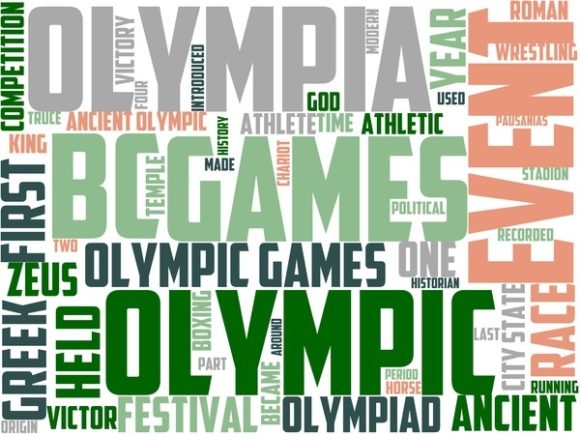
At its core, the Ancient Games Wordart Background is a hand-drawn, colorful wordcloud rooted in themes of strategy, mythology, legacy, and timeless play—think gladiators, oracle stones, chariot races, labyrinth puzzles, and celestial constellations. Unlike algorithm-generated word clouds, this design is crafted with intention: each word is placed by hand, scaled for visual rhythm, and layered with organic texture and chromatic harmony. It’s not just decoration—it’s a functional visual asset built for real-world application across physical and digital workflows.
For creators who move between ideation and execution—whether designing a boutique apparel line, launching an educational workshop on classical civilizations, or building a brand identity for a board game startup—the Ancient Games Wordart Background serves as both a starting point and a finishing touch. Its strength lies in how seamlessly it integrates into existing processes without demanding overhauls. You don’t need to relearn software or restructure your pipeline—you simply bring it in where it adds clarity, resonance, or aesthetic cohesion.
Where It Fits in Your Creative or Business Workflow
This background isn’t meant to sit in isolation. It’s designed to be embedded early in planning phases and revisited late in production. For example:
- Before a project begins: Use it as a mood board anchor when briefing designers or aligning stakeholders on tone. Its blend of antiquity and vibrancy signals “thoughtful tradition meets modern energy”—a useful shorthand for teams deciding whether a new product line should feel scholarly or spirited.
- During development: Layer it behind typography in presentation decks for history-themed conferences, or scale and crop sections for textile swatches when prototyping festival merch. Because it’s hand-drawn—not vector-perfect—it introduces subtle variation that avoids sterile uniformity in repeat patterns.
- After finalization: Repurpose cropped fragments as social media story highlights, packaging seals, or QR code frames. One educator prints small versions onto flashcards for Latin vocabulary drills; another uses it as a watermark beneath student-submitted digital essays on ancient philosophy.
Its versatility comes from intentional constraints: the palette stays within earthy ochres, deep lapis, terracotta, and gold-leaf accents—colors that print reliably on fabric, paper, and ceramic. No neon gradients. No fragile thin lines. That means fewer prepress surprises and faster approvals across vendors.
Integration With Tools and Platforms You Already Use
You won’t need new software to use the Ancient Games Wordart Background effectively. It works natively with common tools:
- In Adobe Illustrator or Affinity Designer, open the high-res PNG or vector file (if available), then use clipping masks to isolate words like “Odyssey,” “Tactics,” or “Mythos” for custom monograms.
- In Canva, upload it as a background image—then adjust transparency to 15–30% for subtle texture under bold headlines. Great for invitation suites or webinar banners where you want theme reinforcement without visual competition.
- For print-on-demand platforms like Printful or Gelato, upload the full background at 300 DPI and confirm bleed zones match your garment or notebook template. Its hand-drawn edges soften hard crop lines—especially helpful on curved surfaces like mugs or tote bags.
- In Notion or Obsidian, insert it as a page header for personal knowledge bases tracking ancient history research or game design notes. The visual cue primes focus before diving into dense text.
It also pairs well with complementary assets: pair it with serif typefaces like Crimson Text or Playfair Display for academic credibility, or contrast it with clean sans-serifs like Inter for contemporary product launches. No clashing—just contextual alignment.
Practical Implementation Tips for Consistent Results
Consistency matters most when scaling across multiple touchpoints—say, matching a conference poster, speaker badge, and follow-up ebook. Here’s how to maintain quality without extra labor:
- Start with one master file—preferably a layered PSD or multi-page PDF where key words are on separate layers. This lets you mute “Oracle” for a children’s activity book but keep “Quest” and “Riddle” visible for a teen workshop.
- Define usage rules upfront: Will you always use the full background, or only curated segments? Document this in your brand guidelines—even informally—to avoid mismatched applications across team members or contractors.
- Test legibility early: Overlay sample body copy at 12 pt on three background zones (lightest, midtone, and darkest). If text requires heavy drop shadows or white outlines in more than one area, consider lightening the underlying layer rather than adding visual noise.
- Preserve texture in reproduction: When printing on natural fiber fabrics (linen, cotton canvas), reduce saturation by 5–8% in your RIP software. The hand-drawn grain reads better with slightly muted color—avoiding muddy browns or chalky blues.
Long-Term Usability and Adaptability
Unlike trend-dependent graphics, the Ancient Games Wordart Background gains relevance over time—not less. Its subject matter resists obsolescence: ancient games appear in museum exhibits, cognitive science studies, UX design metaphors (“the user’s journey is a labyrinth”), and even AI ethics discussions about rule-based systems. That makes it durable across content refreshes, rebranding cycles, and platform migrations.
Users report repurposing it across vastly different contexts without audience confusion—because the visual language communicates *process*, not just period. A marketer uses “Arena,” “Strategy,” and “Legacy” to frame a SaaS product launch; a yoga studio overlays “Balance,” “Ritual,” and “Harmony” for seasonal retreat branding. Same background. Different emphasis. Same authenticity.
For educators, it supports scaffolding: introduce the full background during a unit overview, then gradually reveal individual words as students master concepts—turning visual design into a pedagogical tool. For small business owners, it reduces design fatigue. One craft distillery uses it across label art, tasting room signage, and email headers—creating continuity without commissioning five separate illustrations.
Getting Started Without Overcomplication
You don’t need a formal creative brief to begin. Try this low-friction entry point:
- Download the file.
- Open it in any image editor.
- Crop a 400×400 px square containing three words that resonate with your current priority—e.g., “Wisdom,” “Trial,” “Victory.”
- Use that fragment as a desktop wallpaper, Notion cover, or Instagram grid tile.
That small act builds familiarity. From there, expand intentionally: apply it where repetition strengthens recognition (business cards), where texture elevates perceived value (hand-bound journals), or where thematic resonance deepens engagement (conference programs).
The Ancient Games Wordart Background works because it respects your time, your tools, and your goals. It doesn’t ask you to change how you work—it fits into how you already do. Whether you’re sketching ideas on paper, coding a landing page, stitching embroidery, or drafting a grant proposal, it offers grounded visual support—not distraction. And in a landscape saturated with generic clipart and AI-generated filler, that kind of thoughtful, hand-informed design is increasingly rare—and increasingly useful.