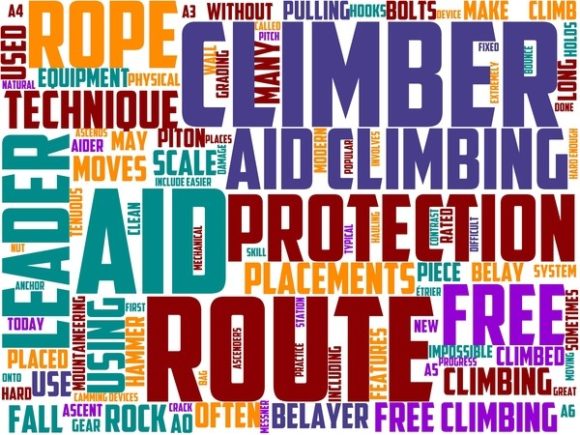
Aid Climbing Wordart Sublimation: Hand-Drawn Inspiration for Modern Makers
There’s a quiet shift happening across creative industries — one where authenticity, tactile warmth, and intentional design are no longer nice-to-haves, but expectations. In this context, Aid Climbing Wordart Sublimation stands out not as a technical term or niche process, but as a thoughtful fusion of meaning, artistry, and practical application. At its core, it refers to a beautifully hand-drawn, colorful wordcloud — crafted with climbing-inspired language like “anchor,” “belay,” “ascend,” “trust,” “focus,” and “summit” — optimized for sublimation printing and versatile digital use. It’s designed for creators who want to embed motivation, identity, or narrative into physical and digital products — without sacrificing visual integrity or emotional resonance.
Why This Wordcloud Fits Real Creative Workflows Today
Modern makers — whether launching a small-batch apparel line, designing workshop materials for educators, or building brand assets for a wellness startup — face two consistent pressures: speed and sincerity. Templates and stock graphics often move fast but feel generic. Custom illustration delivers authenticity but can be time- and budget-prohibitive. Aid Climbing Wordart Sublimation bridges that gap. Its hand-drawn aesthetic retains human imperfection — slight line variations, organic spacing, layered color washes — while remaining fully scalable and production-ready. Unlike rigid vector icons or overused typographic trends, it invites reinterpretation: rotate it, crop a fragment for a sticker, isolate a word for embroidery, or layer it subtly behind text on a poster.
This flexibility aligns with how professionals actually work now. A freelance graphic designer might drop the wordcloud into a Canva template for a client’s team-building event banner. A textile artist could import it into Procreate, adjust saturation for a fabric swatch, then send it to a DTG printer. A teacher might print it on cardstock, cut out individual words, and use them in a classroom “goal-setting wall.” No specialized software or licensing hurdles — just clean, editable files (PNG with transparent background, high-res JPG, and SVG options) built for real tools and real deadlines.
From Niche Motif to Meaningful Design Language
The climbing metaphor — once reserved for outdoor brands or fitness campaigns — has broadened significantly. Terms like “belay,” “pitch,” and “crux” now appear in leadership training, mental health resources, and even curriculum design. They speak to process, support systems, incremental progress, and resilience — ideas that resonate across professions and life stages. That cultural expansion is why Aid Climbing Wordart Sublimation feels timely rather than thematic. It doesn’t shout “I climb mountains!” — it quietly reinforces values many people live by, even if their “ascent” happens at a desk, in a classroom, or during caregiving.
This evolution reflects broader shifts in visual communication: audiences increasingly favor symbols that carry layered meaning without requiring explanation. A well-placed “anchor” in a business card design signals stability; “summit” on a graduation invitation implies earned achievement; “route” on a planner cover nods to intentionality. The wordcloud doesn’t force interpretation — it offers vocabulary. And because it’s hand-drawn — not algorithmically generated or AI-synthesized — it carries the quiet authority of human curation.
Practical Use Across Mediums — Without Compromise
Sublimation printing remains one of the most durable, vibrant methods for transferring design to polyester fabrics and coated hard goods. That makes Aid Climbing Wordart Sublimation especially effective for items where longevity and color fidelity matter: performance apparel, ceramic mugs, aluminum water bottles, tote bags, and even custom yoga mats. But its utility extends far beyond heat-transfer applications:
- Clothing & accessories: Print full-wordcloud layouts on the back of tees, or extract single words for minimalist sleeve prints on jackets or beanies.
- Home décor & textiles: Scale the design for throw pillow covers, wall tapestries, or framed canvas prints — its organic composition avoids the rigidity that can make pattern repeats feel dated.
- Promotional & branded materials: Use it as a subtle watermark on digital presentations, overlay it on email newsletter headers, or adapt sections for QR code-integrated business cards.
- Educational & wellness tools: Integrate words into printable habit trackers, mindfulness journals, or workshop handouts — the visual rhythm supports retention better than plain text lists.
- Mixed media & craft: Laser-cut paper versions for scrapbooking, emboss the outline onto leather journal covers, or translate the layout into thread-painting patterns for embroidery.
Importantly, the design respects production realities. It avoids ultra-thin strokes or micro-detailing that would blur during sublimation transfer or screen printing. Colors are selected for contrast and accessibility — ensuring readability whether printed on navy fabric or pastel paper. And because it’s delivered in multiple file formats, users aren’t locked into one platform or workflow.
Design Integrity Meets Everyday Utility
In an era where “inspirational” often defaults to bold sans-serif quotes on neutral backgrounds, Aid Climbing Wordart Sublimation offers something quieter but more enduring: inspiration rooted in craft. Each curve, overlap, and hue shift was considered — not just for visual appeal, but for how it translates when stitched, etched, or inked. That attention shows up in tangible ways: a mug where “ascend” remains legible after 200 dishwasher cycles, a notebook cover where the watercolor texture softens with handling instead of cracking, or a conference banner where the wordcloud holds visual weight from 15 feet away without overwhelming supporting content.
For entrepreneurs, this means less time tweaking mockups and more time connecting with customers. For educators, it means reinforcing concepts through visual consistency — using the same “focus” motif across slide decks, handouts, and classroom posters. For hobbyists, it means having a meaningful starting point that still leaves room for personalization: adding their own photos behind the wordcloud, blending it with original sketches, or translating it into cross-stitch charts.
Choosing Tools That Grow With Your Practice
What makes this wordcloud sustainable — beyond its immediate usability — is how easily it integrates into evolving toolsets. Whether you’re using Adobe Illustrator for precision layout, Affinity Designer for cost-effective vector editing, Cricut Design Space for craft projects, or even free platforms like Photopea or Inkscape, the files retain fidelity. There’s no reliance on proprietary fonts or cloud-based rendering. The colors are defined in CMYK and RGB, so what you see on screen closely matches printed output. And because the composition balances density and breathing room, it adapts gracefully to different aspect ratios — from Instagram story dimensions to standard A4 print size.
This isn’t about chasing every new app or trend. It’s about selecting foundational assets that remain useful as your skills, tools, and goals change. A designer who starts with simple iron-on transfers can later scale up to full garment sublimation. A blogger who begins with digital quote cards can expand into physical merch without redesigning core visuals. The wordcloud grows with you — not because it’s “future-proofed” in a speculative sense, but because it was built with material honesty, functional clarity, and human-centered intent.
Real Impact, Not Just Aesthetic Appeal
At its best, design does more than look good — it supports action. When someone wears a shirt featuring “trust” and “belay,” they’re not just wearing a phrase. They’re signaling alignment with collaborative values — something that sparks conversation in a co-working space or signals shared understanding at a nonprofit retreat. When a therapist prints the wordcloud on session worksheets, those embedded terms gently reinforce therapeutic frameworks without clinical jargon. When a small-batch jewelry maker uses “crux” as a stamped detail on a pendant, they’re offering a wearable reminder of pivotal growth — not just decoration.
Aid Climbing Wordart Sublimation works because it meets people where they are: in studios and home offices, classrooms and community centers, craft rooms and startup incubators. It doesn’t require expertise in climbing, design theory, or sublimation chemistry — just an appreciation for words that mean something, and visuals that hold space for meaning to unfold.